
Two specs, one floor
A floor that holds a particle class and a resistance band
A cleanroom ESD floor answers to two unrelated documents at the same time: ISO 14644-1 for airborne particle classification[14], and your ESD program for the resistance band[1]. Neither one cares about the other, which is what makes these rooms harder than they look.
Cleanroom ESD flooring
Seams are the particle problem
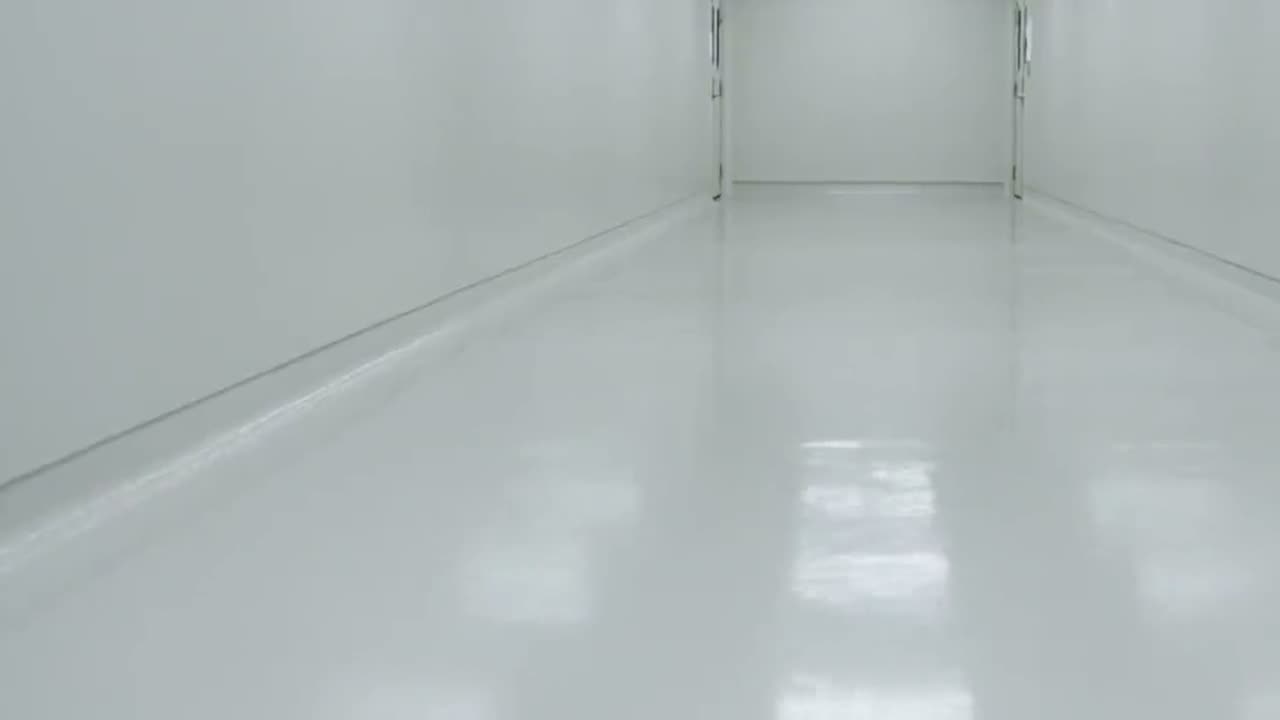
A resinous system installed monolithically has no seams to trap particulate, which is the main reason resinous gets specified over tile in classified space. Coving at the wall removes the other collection point.
Cleaning is the resistance problem
A finish or wax applied for particulate reasons sits between the floor and the ground path and can take a qualified system straight out of range. The cleaning regime has to be written with the ESD program, not after it.
The class does not set the band
ISO Class 5 does not imply a resistance number and ISO Class 8 does not imply a looser one. Your ESD program sets the band, the cleanroom standard sets the particle count, and they are specified separately.
Outgassing and the room's own air
A cured, 100 percent solids system is the reason this category exists. The published system here is 100 percent solids with a vapour permeance of 0.08 perms.
Traffic changes the answer
Carts, pallet jacks and tool moves abrade a floor, and abrasion is what pulls resistance out of band over time. A classified room with heavy internal traffic needs the reverification schedule written up front.
It is still a concrete question underneath
Slab moisture and flatness decide the job the same as any other room. A classified space does not get an exemption from ASTM F2170.
Questions
Does a cleanroom need conductive or dissipative flooring?
Whichever your ESD program specifies. The cleanroom class does not decide it. Dissipative is the usual answer for electronics and device work[5], and conductive is specified where a discharge itself is the hazard.
Will floor finish keep our floor in class but out of ESD range?
It can, and this is the single most common way a qualified cleanroom floor quietly stops working. Anything applied on top of the system sits between the floor and the ground path. Write the cleaning regime alongside the ESD program.
Is ISO 14644-1 still current?
Yes. The 2015 edition was reviewed and reconfirmed in 2021[14].
Sources
- ANSI/ESD S20.20-2021, the ESD control program standard for electronics handling
ESD control program requirements (administrative and technical) for any organization that handles ESD-sensitive electrical or electronic parts.
www.esda.org - ESD Association: conductive or dissipative static control flooring, how to choose
Cited here for the static-dissipative flooring resistance band per the ESD Association.
www.esda.org - ISO 14644-1:2015, cleanroom classification by airborne particle concentration
Cleanroom classification by airborne particle concentration (ISO Class 1 through 9); referenced when an ESD floor also has to hold a cleanroom particulate rating.
www.iso.org
Every number on this page came from one of those documents. Send us the room and we will tell you which of them your floor has to answer to.