

How the work runs
From bare slab to a floor you can walk on in 24 hours
Every resinous system follows the same arc: get the slab right, build the ground path, put the system down, let it cure. The published cure schedule for the conductive system is 24 hours to foot traffic and 7 days to full vehicle traffic at 70 F and 50 percent relative humidity[7].
How the installation runs
Read the slab first
Moisture decides more jobs than anything else. The manufacturer limits are under 80 percent internal relative humidity under ASTM F2170 and 8 to 10 lbs per 1,000 sq ft per 24 hours under F1869[7]. Over the limit means mitigation goes in first.
Mechanical prep, not chemical
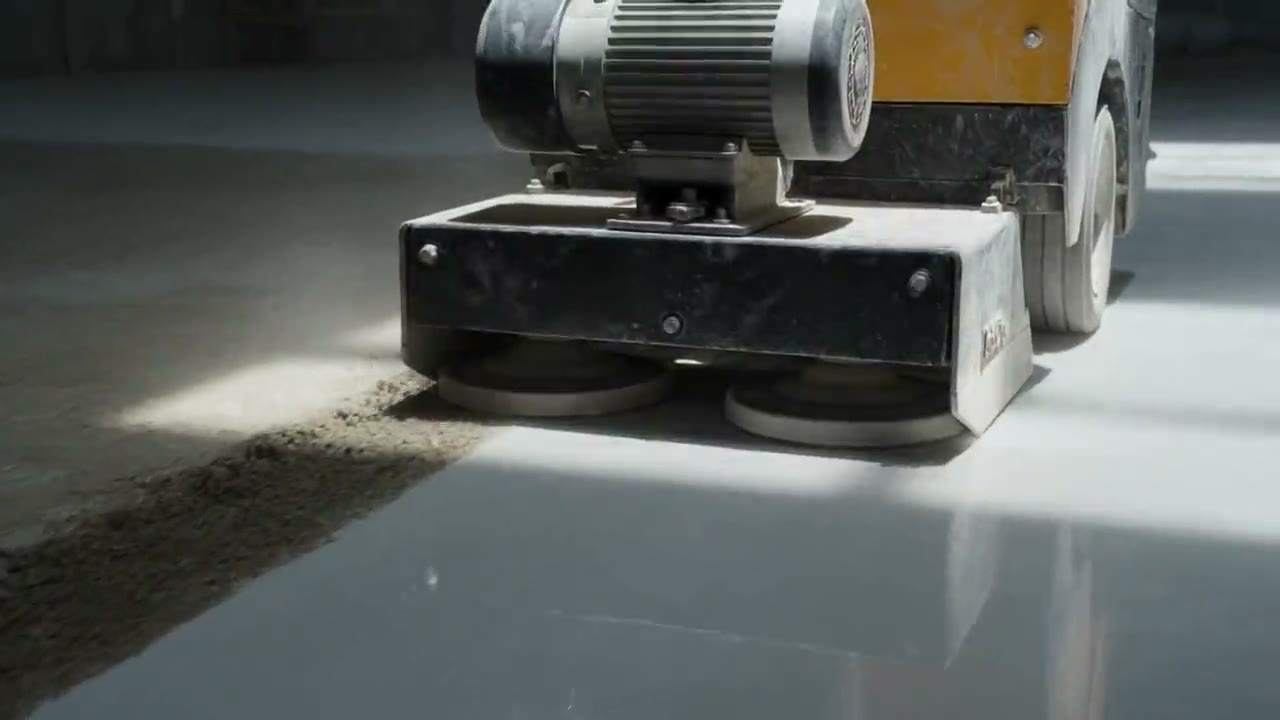
The slab is opened up mechanically so the system can key into it. Old coatings, sealers, adhesives and wax all have to come off, because anything left behind becomes the layer the floor actually bonds to.
The ground path goes in before the coats
A conductive system is only conductive if it reaches ground. The grounding network is built into the floor build up and tied to the building ground, and the standards side of this lives in ANSI/ESD S6.1. Point to ground readings under STM7.1 are what prove it[2].
Conditions during application
The published window is 50 to 90 F material temperature, under 90 percent ambient relative humidity, and the substrate at least 5 above the dew point[7]. A cold slab in January changes the schedule.
Thickness is a specification, not a feel
5 to 7 (6 typical) mils applied, 6 typical[7]. Thickness affects both wear life and the resistance the finished floor reads at.
Cure before traffic, not before it looks dry
24 hours to foot traffic at 70 F, and a colder room takes longer, about 36 hours at 50 F[7]. Forklifts wait the full 7 days.
Questions
How much downtime should we plan for?
Plan the cure, not the install. 24 hours before people walk on it and 7 days before vehicles, at 70 F and 50 percent RH[7]. Colder rooms run longer. Tell us how the space is used and we will build the sequence around it.
Can you work nights or in phases?
Usually, and it is common on a floor that cannot stop. Send us the hours the space can be handed over and where the natural boundaries are. Start here.
What if our slab is too wet?
A mitigation layer goes down before the system. It is a real line item and it is far cheaper than a floor that debonds a year later. The limits are published on the manufacturer data[7].
Do we need to empty the room completely?
The working area does, and how much that is at any one time is exactly what the phasing conversation is about. Racking, benches and fixed equipment all shape the sequence.
Sources
- ANSI/ESD STM7.1-2020, floor resistance test method for static control flooring
Floor systems resistive characterization: the test method for qualifying floor materials before installation and for accepting and monitoring them after installation.
www.esda.org - Conductive and dissipative ESD epoxy technical data sheet, resistance and cure figures
Cited here for the conductive flooring/coating resistance band. The ESD Association's own consumer-facing page states only the <= 1.0 x 10⁶ ohm ceiling with no stated floor.
www.arcat.com
Every number on this page came from one of those documents. Send us the room and we will tell you which of them your floor has to answer to.